How to Write Blog Titles That People Actually Click: A Melbourne Business Owner’s Guide
Melbourne business owners don’t need a marketing degree to notice this: the blog post you spent three hours writing goes online, and almost nobody clicks it. Meanwhile a competitor’s post on the same topic, sometimes covering less ground than yours, sits near the top of the results and gets read every day. The difference is rarely the writing inside the article. It’s the eight or ten words above it, the title, that decides whether a reader in Brunswick or Box Hill bothers to open the page at all. Fewer organic clicks are up for grabs on Google than there were two years ago, which makes a strong title matter more, not less. This guide sets out practical, testable ways to write blog titles that earn the click, with real examples and an honest look at what a genuinely useful title costs to produce.
What actually makes a Melbourne reader click
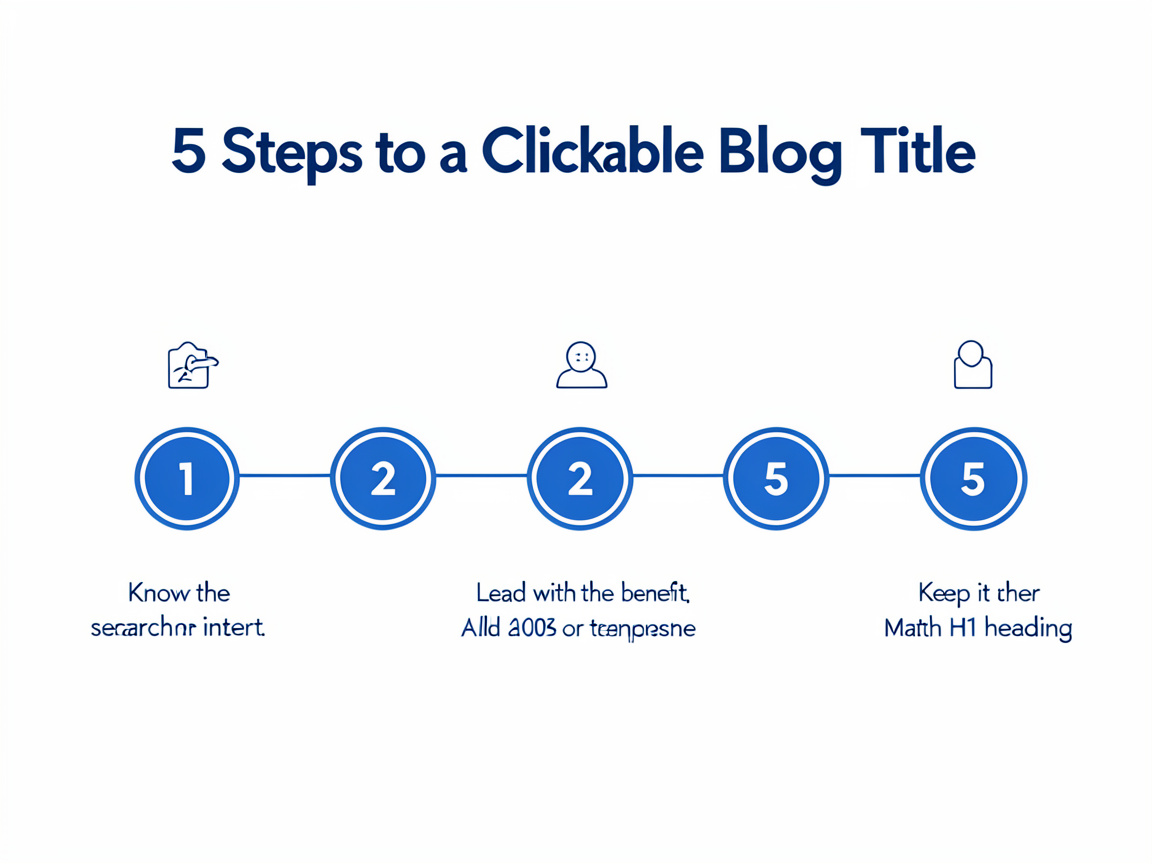
A clickable title does three things in its first few words: it tells the reader what they’ll get, who it’s for, and why it matters right now. A vague title like “SEO Tips for Business” loses to a specific one like “5 SEO Fixes a Richmond Cafe Made Before Christmas” because the second one answers the question sitting in every reader’s head: is this actually about me?
Local business owners scrolling on their phone between jobs are scanning, not reading closely. Give them:
- A clear benefit stated in plain words, not “optimise your digital presence” but “get found on Google Maps”
- A number when one genuinely exists in the article, such as 5 steps, 3 mistakes or 12 months
- A timeframe or point of comparison, because “before you sign a 12-month contract” tells a reader more than “an SEO buying guide”
- The suburb, industry or situation, where it’s true, because Melbourne readers respond to Melbourne specifics rather than generic claims
None of this works if the title overpromises. A title that says “the fastest way” for a process that actually takes four months will cost you the reader’s trust by the second paragraph, and it can cost you in search rankings too, since pages that readers quickly click away from tend to lose ground over time. This is the same checklist our team runs through with every client before a post goes live, as part of the ongoing SEO content strategy work we do for over 500 Melbourne businesses.
If you’re not sure whether your last few post titles are actually working for you, that’s an easy thing to check. We offer a free 30-minute audit where we’ll look at your existing blog titles and tell you honestly which ones are likely costing you clicks, and why. Book your free 30-minute audit and we’ll reply within 24 hours.
Weak titles versus titles that earn the click
Small wording changes make a measurable difference to whether a Melbourne reader stops scrolling. Here’s how the same topic can be written two very different ways.
| Weak title | Why it falls flat | Stronger title | Why it works |
|---|---|---|---|
| SEO Tips for Small Business | Too broad, no clear benefit, sounds like every other post on the topic | 5 Google Business Profile Fixes for a Fitzroy Retailer in Under an Hour | Specific, numbered, states the benefit and the time needed |
| Why You Need a Website | States the obvious and offers no new information | What a New Website Actually Cost a South Yarra Physio in 2026 | Real number, current year, genuine curiosity |
| About Our Plumbing Services | Internal, business-first language that nobody searches for | How Much Does an Emergency Plumber Cost in Melbourne? A 2026 Price Guide | Matches what people actually type into Google |
| Marketing Advice | Generic, no audience, could belong to any industry | 3 Marketing Mistakes We See Every Week from Melbourne Cafes | Specific audience, a number, and implied credibility |
Why the fight for the click just got harder
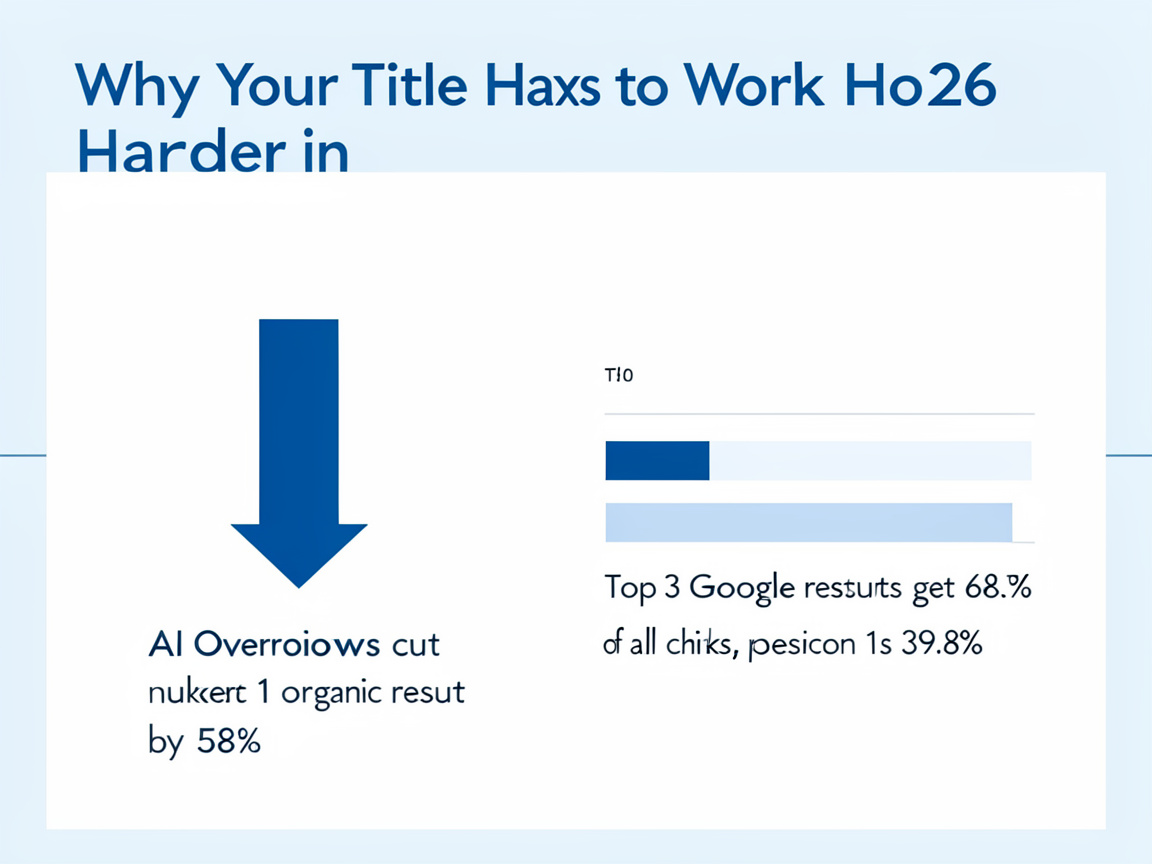
It isn’t only about ranking well any more. Google’s AI Overviews, the short AI-written summaries that now appear above the normal search results for many queries, are already answering a large share of questions before a reader even sees the list of blue links. Ahrefs analysed 300,000 keywords and found that when an AI Overview appears, the click-through rate for the number one organic result falls by 58 per cent, a much sharper drop than the 34.5 per cent measured back in April 2025 (Ahrefs, 2026).
Ranking position still matters enormously within what’s left. First Page Sage’s 2026 report on click-through rates found that the top three organic results capture 68.7 per cent of all clicks on a typical results page, and the number one result on a “clean” page, one without an AI Overview or map pack, still attracts 39.8 per cent of clicks on its own (First Page Sage, 2026). In plain terms: there are fewer clicks in the pool than there used to be, and the title is one of the few things you fully control in the fight for the ones that remain.
Because fewer clicks are up for grabs than there used to be, it’s worth knowing exactly how your current pages are performing before you write another word. We can pull your Google Search Console data and show you, page by page, which of your existing titles are underperforming their ranking position. Ask for a free title and click-through review and we’ll walk you through the numbers in plain language, the same way we do in our fortnightly client reports.
What this costs, how long it takes, and what goes wrong
Writing a strong title takes minutes once you know the formula, but getting a whole content plan right takes longer. If you’re doing it yourself, budget 15 to 20 minutes per post to draft five or six title options and pick the strongest, ideally after a colleague who isn’t close to the business reads them cold. If you’re paying an agency or freelancer, expect blog content (research, writing, on-page optimisation and a title that’s actually been tested against alternatives) to run from roughly $250 to $600 per article in Melbourne, depending on length and technical complexity. A fully outsourced content strategy, covering keyword research, a content calendar and monthly publishing, typically starts from around $1,500 to $2,500 a month with an established local agency.
Most Melbourne business blogs that underperform aren’t let down by bad writing. They’re let down by titles that were an afterthought, bolted on after the article was finished rather than planned before it. Three mistakes come up again and again: keyword stuffing (repeating “Melbourne plumber” three times in one title, which looks spammy to readers and to Google), titles so long they get cut off in search results, and titles that overpromise a result the article can’t back up. Google will also sometimes rewrite your title in its results if it decides your original doesn’t reflect the page content well, so keeping your title and your main heading aligned and accurate is one of the simplest ways to keep control of it (Google Search Central).
Frequently asked questions
Does my blog title have to match my H1 heading exactly?
Not word for word, but they should say the same thing. When the two are aligned, Google is far less likely to rewrite what shows up in the search results.
How long should a blog title be?
Aim for roughly 50 to 60 characters so the whole thing displays in Google without being cut off. Slightly longer is fine if the extra words are doing real work.
Can a great title fix a weak article?
No, and it shouldn’t try to. A title’s job is to earn an honest click. If the article doesn’t deliver on it, readers leave quickly, which tends to hurt rather than help your rankings over time. Our guide on why your blog gets traffic but no enquiries covers what happens after the click.
Writing titles that earn the click is a skill any Melbourne business owner can learn, and the formulas above will get you most of the way there on your own. If you’d rather not test it by trial and error on your own site, our in-house Melbourne team has been doing exactly this, along with the writing, research and reporting behind it, since 2012. We work on a month-to-month basis with no lock-in contract, so there’s no risk in finding out what a stronger set of titles could do for your blog. If turning a single customer question into a full article sounds useful too, our guide on turning one customer question into a blog article is a good next read. Book a free, no-obligation consultation and we’ll reply within 24 hours, free and with no strings attached.
Want results like these for your business?
Book a free, no-obligation consultation with a Melbourne SEO expert.
Get a Free Consultation